
Foot reflexology for migraines: the natural method that makes all the difference
More and more people who suffer from migraines are turning to foot reflexology to relieve their pain. These are often people who are already taking medication regularly to relieve their migraines and who wish to reduce their reliance on medication, or who are beginning to experience side effects, particularly digestive discomfort caused by taking too much medication. These people may or may not know the cause of their migraines, but what they have in common is that they are unable to reduce their severity or frequency.
In this article, I’ll explain how, using ‘foot reflexology for migraines’, I’ve helped migraine sufferers who have seen a significant improvement in their quality of life from the very first session.
Understanding why foot reflexology can relieve migraines
Reflexology principles
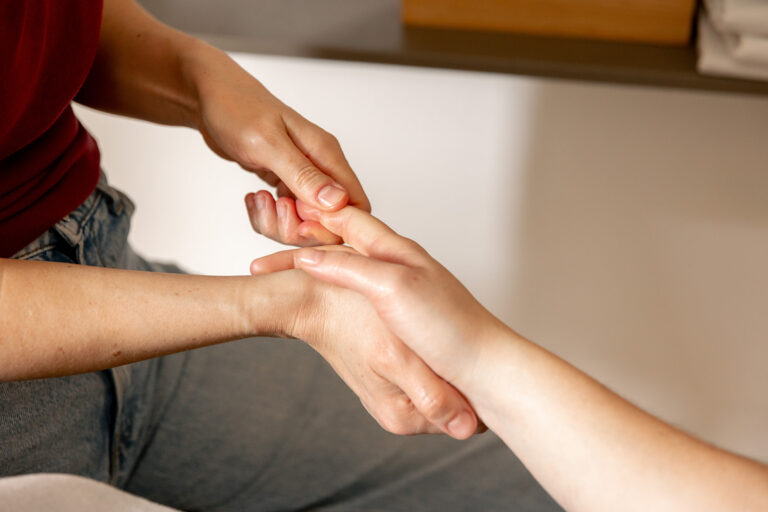
Each area of the foot corresponds to an organ or part of the body. During a reflexology session, the reflex zones on the feet associated with the specific issue are massaged and stimulated to encourage the body to restore its balance. Broadly speaking, reflexology promotes blood, lymphatic and nervous circulation, and stimulates the body to help it regain its natural balance.
As well as promoting homeostasis (the body’s natural balance), foot reflexology helps you relax, and when you consider that work-related stress kills 10,000 people a year in Europe (study), simply relaxing can have a powerful effect. A relaxed body (and mind) means stronger immune and cardiovascular systems.
Reflex zones on the feet linked to the head: clear and practical explanations
Migraines are very often linked to a stress factor. However, because of its close connection with the nervous system, reflexology plays a major role in helping to relax the nerves. During a consultation for migraines, I will stimulate the reflex zones linked to the nervous system, which are mainly located on the toes and along the inner edge of the foot.
There are several foot reflexology techniques for stimulating these areas. Depending on your sensitivity and the shape of your foot, the pressure I apply and the way I work on these areas will vary. My job is to strike a balance between deep stimulation of the area and the relaxation that the treatment will induce in the person lying on the massage table.
So I won’t be stimulating the reflex zones associated with migraine for the entire session, but I’ll alternate with other gentler techniques to help you release tension and better process the nerve signals triggered by the stimulation.
In fact, it’s quite common for the first few sessions of foot reflexology for migraine to be devoted purely to relaxation at the start.

Chronic migraine: what it’s really like for sufferers on a day-to-day basis
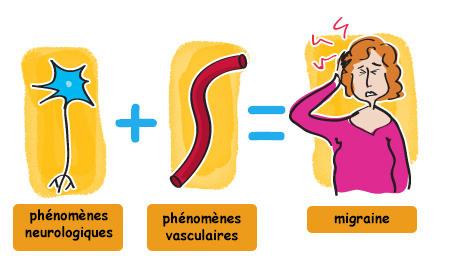
“A migraine attack is a neurovascular phenomenon: it is caused by a combination of neurological (involving the nerves) and vascular (involving the blood vessels) processes […] During an attack, there is temporary dilation and inflammation of the arteries of the dura mater (one of the membranes, or meninges, surrounding the brain). It is the inflammation and dilation of these arteries that cause the pain.
In order to provide the best possible support for someone who suffers from migraines and to reduce the frequency and severity of their attacks, it is important for me to understand the circumstances at the time the attack occurs, and their living environment, which is, of course, unique to each individual.
There may be a link between the stress a person experiences in their daily life – stress which generates muscle tension that builds up and triggers migraine attacks. However, the cause may be something else entirely, linked to digestion, the hormonal cycle…
This is where foot reflexology can play an interesting role, as it is a method that can target different systems within the body.
Stress, nervous tension: a vicious circle that’s hard to break
The more frequent the migraine attacks, the more overloaded the nervous system becomes, and the harder it is to regain balance on one’s own. Migraines lead to increased fatigue and stress, and you end up in a vicious circle that is difficult to break without the help of a healthcare professional.
That’s also why I recommend one session a week to start with, to give your body a fresh boost and to ‘ride the wave’ of change.
Why more and more migraine sufferers are turning to natural remedies
Medicines to stop migraines are effective, and they’re important for day-to-day comfort. It’s better to take a Dafalgan than to risk suffering a migraine attack all weekend. However, some people find they tolerate them less well over time. Either the side effects (digestive discomfort, impact on sleep) increase, or the medicine’s effectiveness itself decreases.
Furthermore, for people who have not identified the cause of their migraine (and who have ruled out any underlying medical conditions), reflexology may be a worthwhile approach. It is also essential to consider the person as a whole – taking into account their life circumstances and way of thinking – in order to provide appropriate support.
I’d like to share a case study involving a client who came to the practice specifically for migraines and achieved stunning results with reflexology.
Case study: when foot reflexology provides relief from chronic migraines
Profile of the person receiving support
A 24-year-old woman came to see me to find relief from her migraine attacks. She had been suffering from severe headaches since the age of 6 or 7. Her migraines were accompanied by an aura, to the extent that she regularly vomited. At the time of our consultation, she had been experiencing a constant headache for one month, and anti-inflammatory medication was no longer effective. Her pain was rated at 9 out of 10 at the time of the session.
How the reflexology treatment is carried out
Given that she had been suffering from migraines for years and had been experiencing them non-stop for the past month, it was unlikely that a single session would resolve all her problems. I explained my approach and the frequency of sessions I recommended in this case, namely one session per week. Once we were clear on these steps, we moved on to the treatment.
I focused specifically on the head area and the emunctory organs (namely the organs that cleanse the body, such as the lungs, liver and kidneys).
During the second session, I learnt that the headache, which had been going on for a month, had stopped the day after our session and had only returned the previous evening. I continued to work on the same areas and added areas related to the muscular system, particularly around the neck and upper back. After three sessions, the migraines were at 6/10 in terms of pain and less frequent. By the sixth session, she was experiencing fewer than one migraine every 15 days, and these would subside within 20 minutes with medication.
The results obtained
The person soon noticed a reduction in the number of migraine attacks and a decrease in their severity.
Alongside our work on the reflex zones, we have identified ways to improve her daily life to prevent her from building up nervous tension and to help her manage stress more effectively.
Fiona est magique. Professionnelle, très à l’écoute, fine (elle comprend naturellement les gens) et douce, elle m’a changé la vie. Je la recommande ++++++++ Un immense merci 🤩🙏☺️
Foot reflexology for migraines: what mechanisms account for these improvements?
Relaxation of the nervous system and reduced stress: an essential combination
Foot reflexology stimulates the parasympathetic nervous system, which is closely linked to relaxation and letting go. The one-hour session provides a space where the body can settle and unwind.
This relaxation helps to reduce muscle tension. And, with your consent, I can work on areas of the skull (particularly the occipital region at the base of the skull and the face) to directly reduce muscle and nervous tension in these areas. My aim is to convey the same message through different channels so that the body can absorb whatever works best for it.
In fact, there have been times when I haven’t worked on the head areas AT ALL with someone who came in for a migraine, as relaxation had to take priority above all else.
Improved blood flow and oxygenation of the brain
Massaging the reflex zones of the foot encourages blood return, which in turn affects the body’s blood supply. It is well known that migraine is a combination of neurological and vascular effects (affecting the nerves and blood vessels). A massage that promotes better circulation, reduces inflammation and relaxes the nervous system can only be beneficial in reducing migraines.
Reducing stress: a key factor
As foot reflexology is a non-invasive hands-on method, a gentle, therapeutic touch will help to lower cortisol levels and bring about significant mental relaxation. Even a session focused ‘solely’ on relaxation will be beneficial in reducing migraines, as stress is known to be one of the main triggers.
There are therefore several reasons why I would recommend reflexology for migraines.
Practical tips if you’d like to try foot reflexology for your migraines
How many sessions should I allow for before I start to feel the first effects?
With this reflexology treatment for migraines, consistency is key to reducing symptoms. I recommend one session a week to begin with for a month, followed by gradually spacing out the sessions depending on how your symptoms develop.
I have sometimes followed this schedule of one session a week for a month, then spaced them out to one session every two weeks, before finally returning to one session every 10 days for a few weeks, as the migraine would be triggered on the 10th day after the last session. Once again, everyone reacts differently, and the advantage of this type of approach is that the treatment is personalised and tailored to the individual.
Self-massage: reflex points to stimulate yourself when you have a migraine
- Gentle reflexology self-massage for preventative care. (video)
- Point on the face: In the hollow of the bone, where the eyebrow begins near the inner corner of the eye. Apply firm pressure with your thumbs, holding the point for about 30 seconds, with your elbows resting on a table. You can also pinch the base of the eyebrow. Remember to relax your shoulders and neck as much as possible so as not to create any additional tension.
Conclusion: why foot reflexology is a promising approach to treating migraines
Migraines affect a large number of people and can significantly impact quality of life. Given the limitations of certain drug treatments and the growing need for natural solutions, foot reflexology is emerging as a credible complementary approach to better manage migraine attacks. By stimulating specific reflex zones on the foot linked to the head, the nervous system and stress, this practice promotes deep relaxation which can help reduce the intensity, frequency and duration of migraines.
As our case study has shown, many patients report a noticeable reduction in their symptoms as the sessions progress: more restful sleep, better emotional management, less neck tension and a quicker recovery following an attack. Of course, foot reflexology is not a substitute for medical care where this is required, but it forms an integral part of a holistic approach to the natural relief of migraine.
If you suffer from regular migraines and are looking for a gentle alternative to help ease your daily life, it may be worth considering a foot reflexology session for migraines. A course of sessions, combined with a healthy lifestyle, could well prove to be a real help in preventing and managing attacks.
👉 Fancy giving foot reflexology a go for your migraines?